
Full art Pokemon cards are some of the most eye-catching cards in the game. Instead of a small picture box surrounded by text, the artwork stretches across the whole card, with text printed over the top. They are usually rarer than regular cards, and they are often the first thing collectors look for when they open a pack.
This guide explains what full art Pokemon cards are, the eight main types you will find across the eras, and how to collect them without overspending.
What Are Full Art Pokemon Cards?
A full art card is any card where the illustration covers the entire face of the card. The name, HP, attacks and other text sit on top of the artwork. Many full art cards also have a textured surface you can feel with your fingers, which makes them look and feel premium.
Full art Pokemon cards first appeared in the Black and White era and have been part of almost every set since.
8 Types of Full Art Pokemon Cards
1. Full art Pokemon ex and Pokemon-EX
Ultra Rare versions of powerful Pokemon. In the current era these are usually full art Pokemon ex or Mega Evolution Pokemon ex, often with a textured, single-colour background.
2. Full art Trainer cards
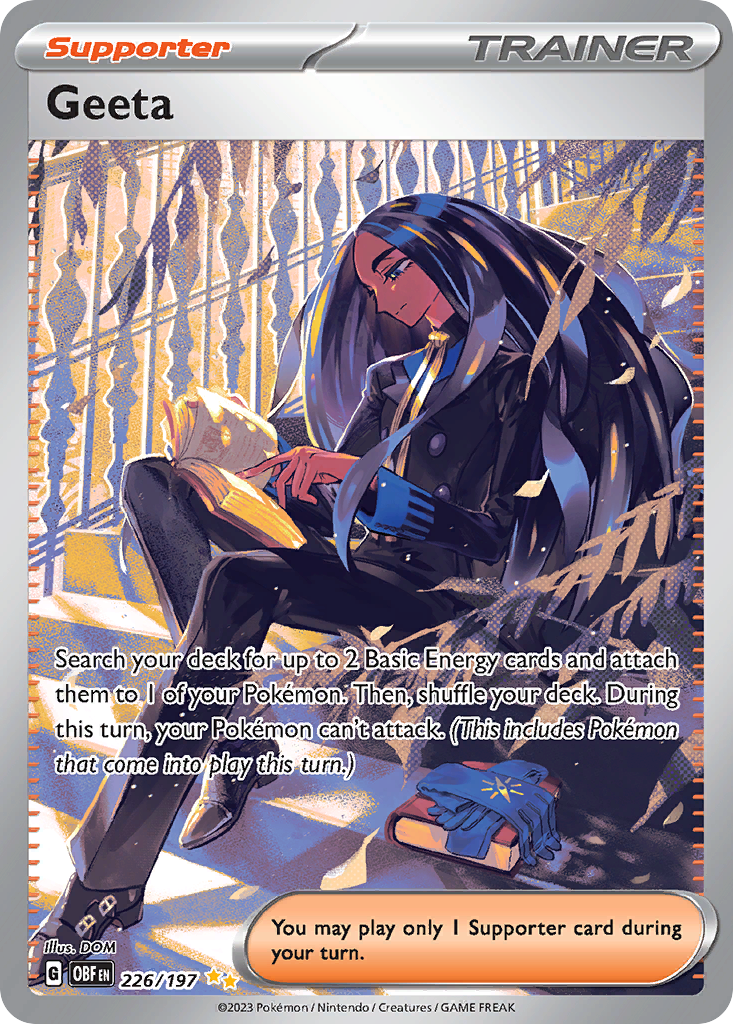
Supporter cards that show a character from the games across the whole card. Full art Supporters, such as Geeta from Obsidian Flames, are hugely popular with collectors. Our Geeta Special Illustration Rare is a great example.
3. Illustration Rares
Introduced in the Scarlet and Violet era, Illustration Rares show a regular Pokemon in a full scene, often in its natural habitat. They are numbered above the main set.
4. Special Illustration Rares
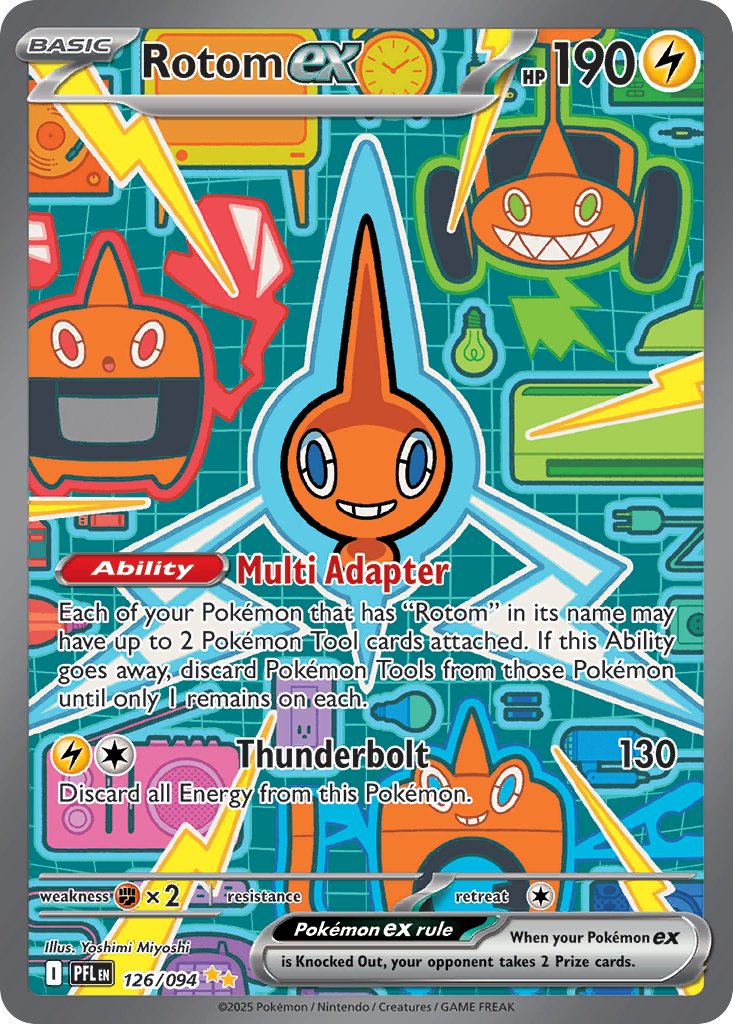
The top art cards of the modern era, showing Pokemon ex and Supporters in detailed scenes. Examples include the Miraidon ex Special Illustration Rare and the Rotom ex Special Illustration Rare.

5. Alternate art cards
In the Sword and Shield era, alternate art cards showed Pokemon V and VMAX in illustrated scenes. The Umbreon VMAX alternate art from Evolving Skies is the most famous.
6. Rainbow rares
Sword and Shield era full arts with a rainbow sheen. They were the top rarity for several years before gold cards took over.
7. Gold cards
Gold full art cards, such as Hyper Rares and Mega Hyper Rares, are usually the hardest pulls in a set. The Iono’s Bellibolt ex Hyper Rare shows how striking a gold card can look.
8. Trainer Gallery and character cards
Some sets include subsets where Pokemon appear with their Trainers in full art scenes. Silver Tempest’s Trainer Gallery is a popular example.
How to Tell If a Card Is Full Art
Look for these signs:
- The artwork reaches the edges of the card.
- The text sits over the artwork rather than in a separate box.
- The card number is often higher than the set total, such as 226/197.
- Many full arts have a textured or etched surface.
- The rarity mark is a special symbol rather than a simple circle, diamond or star.
Why Collectors Love Full Art Pokemon Cards
Full art Pokemon cards are miniature artworks. Each one is drawn by a specific illustrator, and collectors often follow their favourite artists across sets. They also look fantastic in a binder, especially on pages with black backing.
Many full arts are also rarer than regular cards, so they hold value well when kept in top condition.
Are Full Art Pokemon Cards Valuable?
Many are, but value varies. A full art of a popular Pokemon, such as Pikachu, Charizard or Umbreon, can sell for far more than a full art of a less popular Pokemon. Condition matters too, because textured surfaces show scratches easily. Special Illustration Rares and gold cards are usually the most valuable full arts in modern sets.
Graded full arts
Full art cards are popular for grading, because a perfect grade can add a big premium. Check the centring, edges and surface carefully before deciding to grade.
How to Collect Full Art Pokemon Cards on a Budget
- Pick a theme: one Pokemon, one artist or one type of full art
- Buy singles: chasing full arts in packs gets expensive quickly
- Start with Illustration Rares: many are affordable and beautiful
- Look at older sets: some Black and White and XY full arts are good value
- Trade duplicates: swap with friends for the cards you need
Protecting Full Art Cards
Textured full art Pokemon cards scratch easily, so protect them the moment you pull them. Use a premium penny sleeve, then a toploader or magnetic holder for valuable cards. Store the rest in a zippered binder with side-loading pages. Keep them out of direct sunlight, which can fade the colours over time.
Displaying a Full Art Collection
A full art binder is one of the most satisfying things to build. Organise by set, by Pokemon type or by artist, and use black-backed pages to make the colours pop. For your favourite card, a magnetic holder on a shelf turns it into a small piece of wall art.

Full Art vs Regular Holo Cards
A regular holo card has a shiny picture box and a standard card layout. A full art card replaces that layout with artwork across the entire card. Both are collectable, but full arts are usually rarer and more expensive. Many collectors enjoy both: regular holos for complete sets and full arts as the highlights.
Following your favourite artists
Every card credits its illustrator in small print near the bottom. Many collectors build full art Pokemon cards binders around one artist, because each illustrator has a recognisable style, from soft watercolours to bold, graphic designs.
Full Art Pokemon Cards FAQ
What is the rarest type of full art Pokemon card?
In modern sets, gold Mega Hyper Rares and Special Illustration Rares are usually the hardest to pull.
Are full art Trainer cards worth collecting?
Yes. Full art Supporters are some of the most popular cards with collectors.
Where can I see every full art card in a set?
The official Pokemon card database lists every card, and our Pokemon singles range includes many full art favourites.
Full art Pokemon cards turn every pack into a little art gallery. Learn the types, protect your pulls and build a binder you will love showing off.

